My First Post
wasn't supposed to be about Lana Del Rey

The first thing I want people to know about me is Rachael. We met when we were twelve. Despite living in Thatcham (a small town in south west England, one of the country’s oldest) she spoke with an American accent throughout the first year of secondary school. We became friends. Best friends. Soul mates. I’ll go into it later.
Rachael died of suicide in 2016. I started writing shortly after, hoping that if I got good enough, I could write her back into life with rigor and honesty and clarity. I’m too tired for rigor, too selfish for honesty, too histrionic for clarity. Which is just as well.
Earlier this year, in June, I gave myself a day to write a book proposal (I work well under pressure) on Lana Del Rey’s 2011 album ‘Born To Die’. The album was one of Rachael’s favourites, and it signalled a turning point in our friendship. In lieu of saying more, I’m going to post the rejected sample chapter here. It’s titled ‘YouTube, Tumblr and Affective Montaging’. Other chapter titles I proposed were: ‘Blog To Die’, ‘Lana’s Awkward Performance & Melancholy Stasis’, ‘Sexy Sexual Difference’ and ‘Making The Sad Girls White Again’.
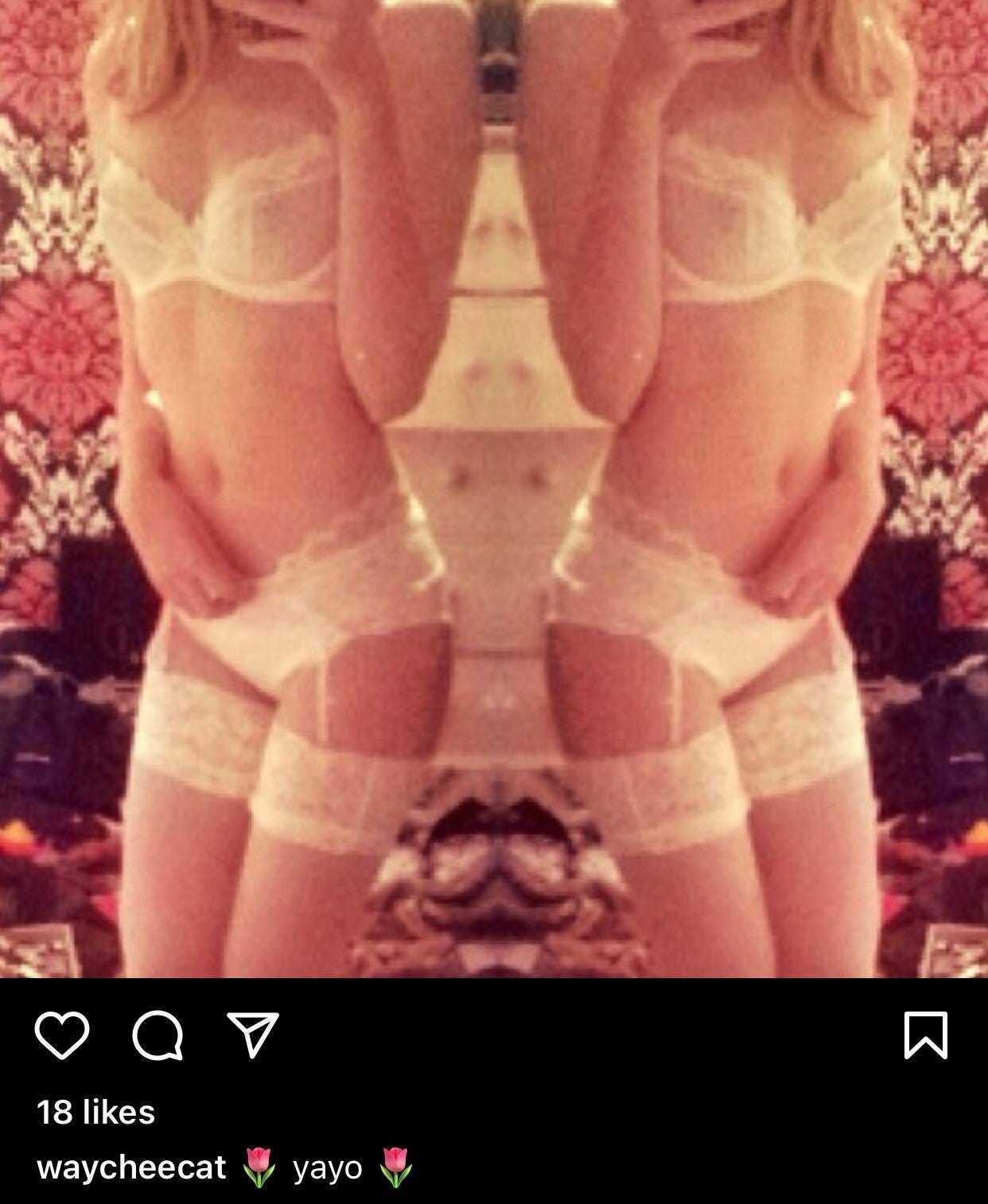
Before I went home to masturbate, Rachael was dancing at herself in front of the mirror. She was swaying to a song called ‘Yayo’, she was caressing everywhere except her genitals, she was fantasising in front of me. It disturbed me to the point of averse arousion. Lana always turned her this way. She was singing things like “let me put on a show for you, daddy,” “let me put on a show for you, tiger”, and, like overhearing my parents whisper, I tried to overpower my curiosity with revulsion. Later, a different friend would tell me she’d rather have someone masturbate in front of her, than have to watch someone listen to Lana like that. The cinematography of fantasy and desire that no one else was privy to. To outside viewers, we could only hear the noise of the projector. But in this memory—my friend, my alive, seventeen year-old friend, I now realize, was doing more than just fantasize. Still a virgin, she was making herself a recognizable subject of heterosexuality.
On Born To Die, Lana iconographizes, enchants, and eroticizes the heterosexual gaze until it fractures into a series of petrified, easily replicable visual tropes. She narrates from both sides of the heterosexual dyad—two subjects, man and woman, one of whom would rather be looked at, while the other does the looking. They both need the other to fuel the vision; the perfect pornographic clarity of a heterosexual gaze which reduces man to Humbert; woman to Lolita; America to red, white and blue. “You’re lying with your gold chain on, cigar hanging from your mouth. You never looked so beautiful as you do now, my man,” she sings on ‘Off To The Races’. While her man “Likes to watch me in the glass room, bathroom. Chateau Marmont, slippin' on my red dress, puttin' on my makeup. Glass room, perfume, cognac, lilac fumes. Says it feels like heaven to him.” In Lana’s world, and largely our own, masculinity and femininity and configured through the necessary alterity of heterosexuality. This isn’t just a libidinal desire, but an ontological one. In order to exist, man must see; woman must be seen. Heterosexual desire, through a series of static, pornographic, and conflicting tropes, allows for the actualization and imminent realization of becoming. Man and woman, both dancing at themselves in front of the mirror.
In order to re-eroticize the constructed sexual differences between heterosexual man and woman, Lana borrows from the popular culture which helped construct them in the first place. “Blue jeans, white shirt, walked into the room you know it made my eyes burn. It was like James Dean, for sure,” she sings on ‘Blue Jeans’. Elsewhere, on ‘National Anthem’, she plays Marilyn Monroe while she was John F. Kennedy’s mistress—the ultimate image of extramarital glamour. As Eva Illouz writes in Cold Intimacies: The Making of Emotional Capitalism, all our desires, and supposed subjective experiences, are themselves a product of and designed by the cultural industries.
The affective impact of culture on our emotional, social, and sexual lives was perhaps no better realized than on Tumblr, an image-heavy, microblogging website, which experienced its heyday when Lana released Born To Die in 2011. With the album on repeat in the background, Rachael spent most days and nights on Tumblr, showing up to class wired on a dream-filled two-hour sleep, after scrolling through images of screenshotted, filtered, and captioned movie scenes; actors from twenty years ago, when they were at their most beautiful; a bruise on a leg captured as it leaked into the most magnificent blue; a sunrise over a hill, with teenagers smoking cigarettes silhouetted in front of it; a man’s big, veiny hand on a thin, pale skirted leg; pink tongues swirling saliva into mouths, over and over, forever and ever, locked into a death-defying gif. Images that panged with gorgeous pain, as they exhibited the subject at their most exhilarated, and left the viewer with the residual knowledge that that moment had since passed, and died. The excess of feeling; more life than life, more death than death.
Lana Del Rey held a central place in the montaged imaginations and fantasies of a certain kind of Tumblr user—the self-harmer. In the 10 years since she released Born To Die, a popular criticism has been continually railed towards Lana, that she ‘glamorizes’ sadness and abuse; the same criticism that led to the banning of self-harm blogs on Tumblr in 2012. But this judgement fails to recognize that the sadness felt by Lana and self-harmers isn’t self-implicated. We often tend to put the onus on the sad and abused. ‘If he’s so bad, why didn’t she leave him?’ ‘If it fucked up your life so much, why did you choose to get addicted to drugs in the first place?’ ‘If you didn’t want people to see the scars, why cut your arms?’ When the pained exhibit their pain, we act with revulsion and distrust. When Rachael carved her crush’s name with a protractor she stole from the school’s math department in the tenth grade, nobody spoke to her for a week. When your situation is one of unrelenting, inarticulate, unyielding, incomprehensible, inescapable sadness—how else are you to bear it than to glamorize it? How else are you to find others, who’ve also yet to rearticulate their cry for help into an intelligible yelp, than to aestheticize your situation?
As Lana often does in her music, the self-harm community on Tumblr ascribed a great deal of transformative beauty to their blood and bleeding scars. The reliable rush of pain, and the awe we hold towards our body’s natural impulse to overcome it, became fodder for an easily mimicked and coherent aesthetic on Tumblr. Scrolling through the five-year long archive of Rachael’s Tumblr, it’s clear how deliberately chosen and streamlined her image choices are. Braced by a baby pink—what we now call ‘millennial pink’–background, most of the images contain emotionally assaulting content filtered through a soft and faded light; a pastel color scheme. Parma violet-colored pills. Scars the shade of weakly drawn lines of water color. Bruises around throats where a hand had been, the tones of twisted marshmallows. And, of course, Lana in gif form with a pastel-colored flower crown on her head repeating the words ‘I wish I was dead’.
As Lana created a world on Born To Die in which the violence of fantasy and desire were foregrounded, on Tumblr, users like Rachael foregrounded the beauty of pain itself; where the realization of dangerous fantasies were lived out on the phantasma of their screens, under the aesthetic category of ‘soft grunge’. We felt and still feel the same way towards this new kind of Tumblr born, Lana associated young woman, as we did Antigone. “She has a quality that both attracts us and startles us Jacques Lacan,” wrote in 1997, “a quality that both attracts us and startles us, in the sense of intimidates us; this terribly, self-willed victim disturbs us.” We may believe her victimhood to be self-willed, but Lana, and the generation of Lana girls, were merely being dragged by the strong currents of culturally constructed heterosexual desire, and the irresistible lure of sexual difference therein. They only refused to hide the pain it produced in them, as polite society would have demanded.
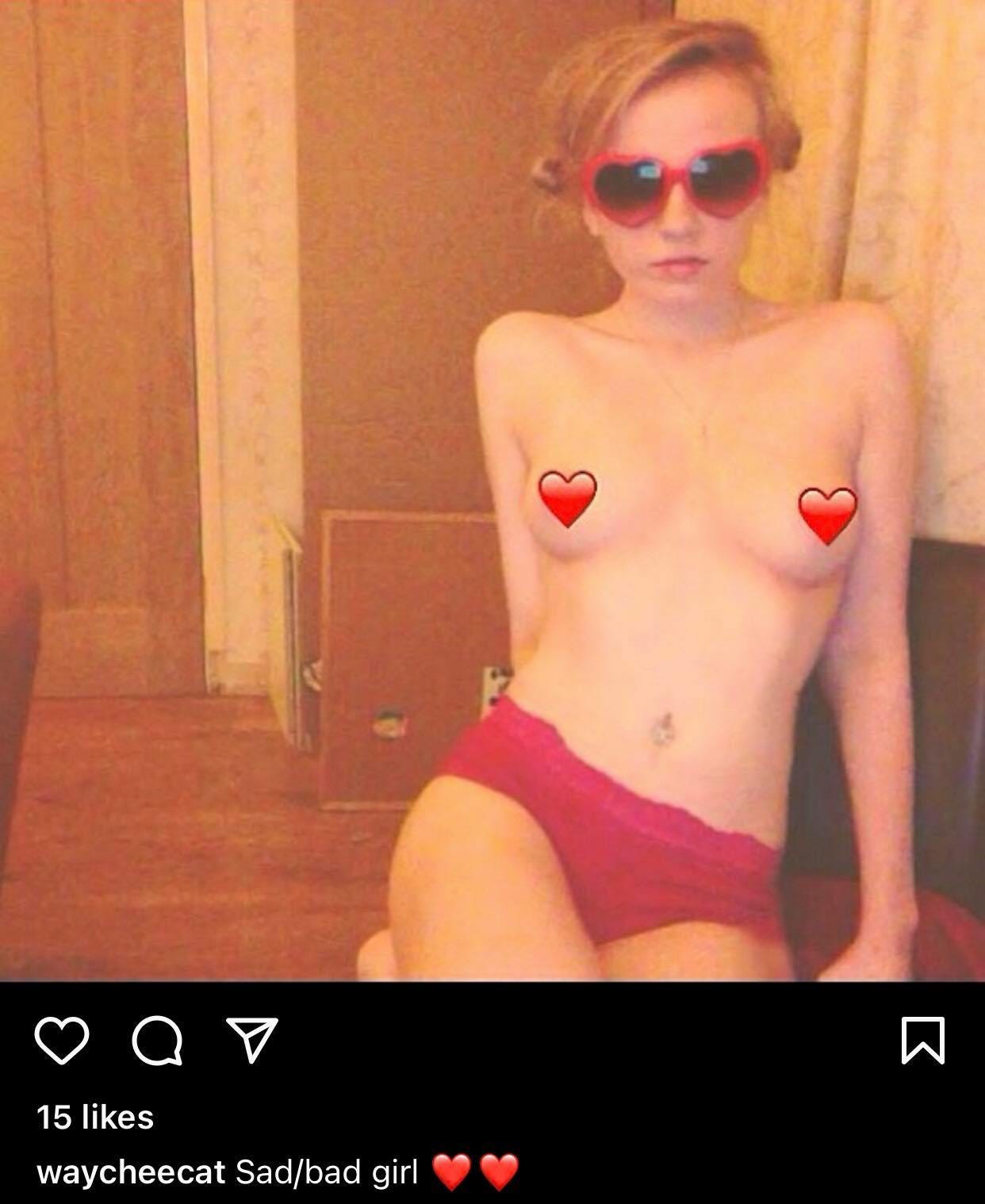
On Tumblr, with Born To Die playing, Rachael began to construct and luxuriate in her burgeoning heterosexual subjectivity, through a context of dissatisfaction and pain. She often reblogged posts from the ‘Sugarbaby’ community, of which there were an active 150,000 users in the year following the release of Born To Die. The Sugarbaby community, often in conjunction with the Lolita community, reblogged images of silver-haired daddies with school-skirt, hairless skinned young girls and nymphets; simultaneously pining for this sexual-differenced fantasy, while also expressing their dissatisfaction with it. NymphetsLife, which was consistently ranked as one of the most popular contributors in both communities, and who Rachael reblogged often, regularly collaged and shared images of Lana Del Rey wearing the heart-shaped sunglasses popularized in Stanley Kubrick’s film adaption of Vladimir Nabokov’s Lolita. Images which seemed to reassert ideas of natural sexual difference, in which men’s power and women’s subordination were eroticized, while threatening to dissolve the borders between fantasy and reality; identity and desire. This is not the product of a self-willed victimhood, but rather a productive form of masochism. A masochism that takes control of the technologies that produce heterosexual subjectivity, and convert them into affective images of pleasure. There she is again. My friend, in the mirror, fantasizing over her imagined daddy.